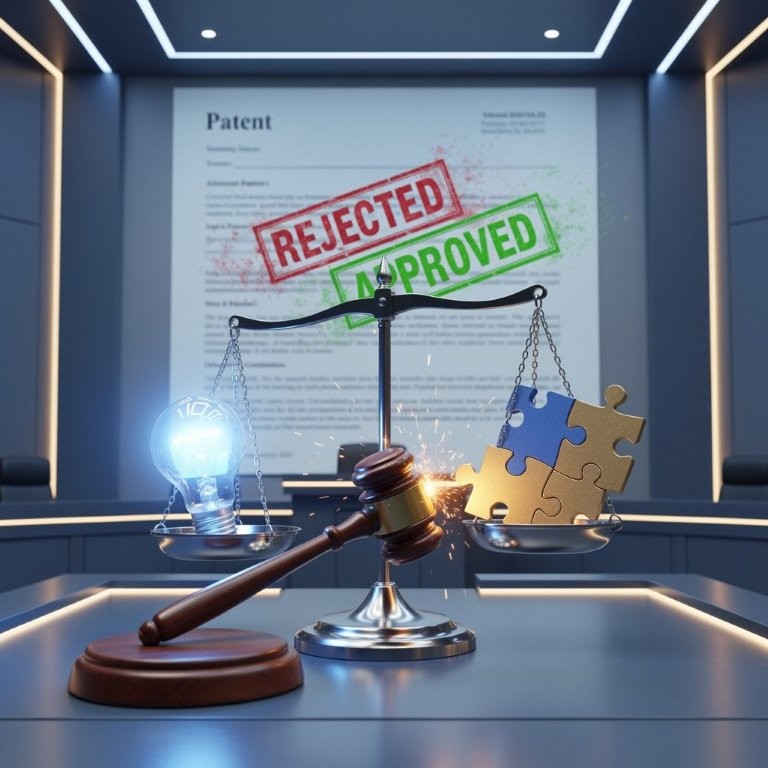
At its heart, the 2007 decision revolved around a seemingly simple invention: an adjustable electronic car pedal. But the legal question it answered was profound. Before KSR, patent examiners were bound by a rigid standard. To reject a patent for being obvious, they needed clear evidence—something like a prior document explicitly suggesting combining the exact elements in question. The Supreme Court, however, declared that framework too narrow. Instead, they empowered examiners to apply common sense, reasoning that a person skilled in a given field might naturally combine known concepts simply because it made logical sense to do so.
In practice, this made it harder to patent incremental or predictable combinations, while also making the system fairer by requiring examiners to explain their rejections in practical, real-world terms. Gone was the strict checklist; in its place arrived a more flexible, holistic judgment.
Following the ruling, the U.S. Patent Office outlined several common-sense rationales for deeming an invention obvious. These include combining two known elements to achieve an expected result, simply substituting one known material for another, or applying a known technique to a similar device. Other paths include addressing a recognized need with a known solution, pursuing an option that was “obvious to try” among a finite set of alternatives, or merely following market trends.
If faced with such a rejection, all is not lost. The key is to demonstrate why your invention defies that common-sense logic. Argue that it produces unexpected benefits or surprising results. Show that experts in the field had previously taught away from such a combination. Emphasize elements the examiner may have overlooked, or secure a declaration from a specialist explaining why the invention is not obvious to a skilled practitioner.
For example, Apple successfully defended its early “slide-to-unlock” patent by proving that no one had previously combined a simple swipe gesture with a secure unlocking mechanism—and that this integration created a uniquely intuitive user experience.
If the U.S. Patent Office rejects your application, carefully review their reasoning. A strong, evidence-based response focused on the non-obvious aspects of your invention is crucial. If necessary, be prepared to appeal or thoughtfully amend your claims.
Ultimately, KSR did not kill patents; it raised the bar. The decision filters out inventions that are merely obvious iterations, while still protecting those that achieve something genuinely new and unexpected. The lesson for inventors is clear: before filing, honestly ask whether your idea does more than just assemble existing pieces. If it does, be ready to articulate why. And when navigating this nuanced landscape, consider consulting a patent attorney to help build the strongest possible case.
Patents remain a powerful tool for protecting innovation—you just need to be prepared to prove why yours is special.